
Property and the Public Compact
The Social ContractThis flow follows Rousseau’s account of how possession becomes protected property while remaining subordinate to the community’s common authority.
increasing Bearing strength in each event
 decreasing
Bearing strength in each eventdecreasingPossession Before Property

Possession Before Property
A Fragile Claim
Need and physical occupation may explain possession, but neither alone creates a secure civil title. The right of first occupancy remains weak without a public order.
A Social Problem
Claims to land must be reconciled with everyone else’s need for a place to live. Mere power to exclude cannot settle the question justly.
Occupancy Conditions

Occupancy Conditions
Limits on Appropriation
Rousseau requires unoccupied land, a reasonable amount, and labor or cultivation rather than empty ceremony. These conditions restrain expansive claims.
Universal Access
Seizing vast territories can deprive others of habitation and subsistence. The argument challenges imperial claims founded on symbolic possession.
Compact Converts Possession
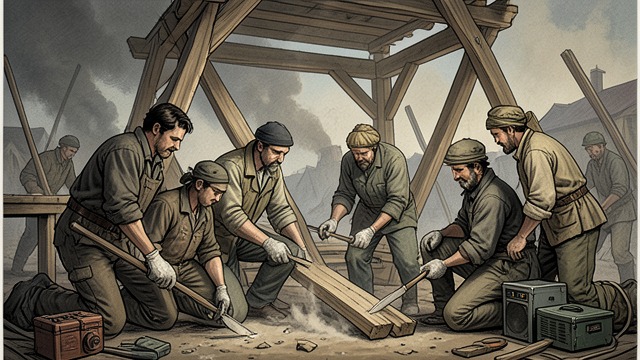
Compact Converts Possession
Public Recognition
Through association, possession can become legitimate property recognized by the community. Public force protects what isolated individuals could not reliably defend.
A Mutual Benefit
Rousseau presents this as an exchange: people contribute their holdings to the common order and gain secure enjoyment under shared rules.
Public Right Takes Priority

Public Right Takes Priority
Individual Estates Within the Whole
Each person’s estate exists under a prior communal framework. Without the community’s authority, property lacks the stable conditions that make it a civil right.
Security and Sovereignty
The community’s priority supports the social tie, but it does not mean that every particular seizure is justified. Legitimate authority must still serve the common good.
Equality Qualifies Ownership
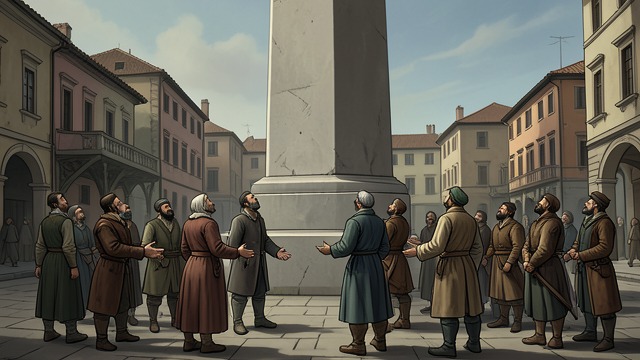
Equality Qualifies Ownership
Independence Preserved
Rousseau does not demand identical fortunes. He warns against wealth that buys another person and poverty that forces someone to sell himself.
A Political Limit
Economic arrangements matter because extreme dependence undermines equal citizenship. Property is legitimate only within a society that protects the freedom of its members.
Book I, Chapter IX, before civil titles are established
Book I, Chapter IX, at the stated conditions for first occupancy
Book I, Chapter IX, when private holdings enter civil society
Book I, Chapter IX, at the chapter’s conclusion
Book II, Chapter XI, among the conditions of good legislation
